The Standard Poodle: Large, Athletic and Whip-Smart
By The Poodle Guide editorial team · Updated on July 20, 2026
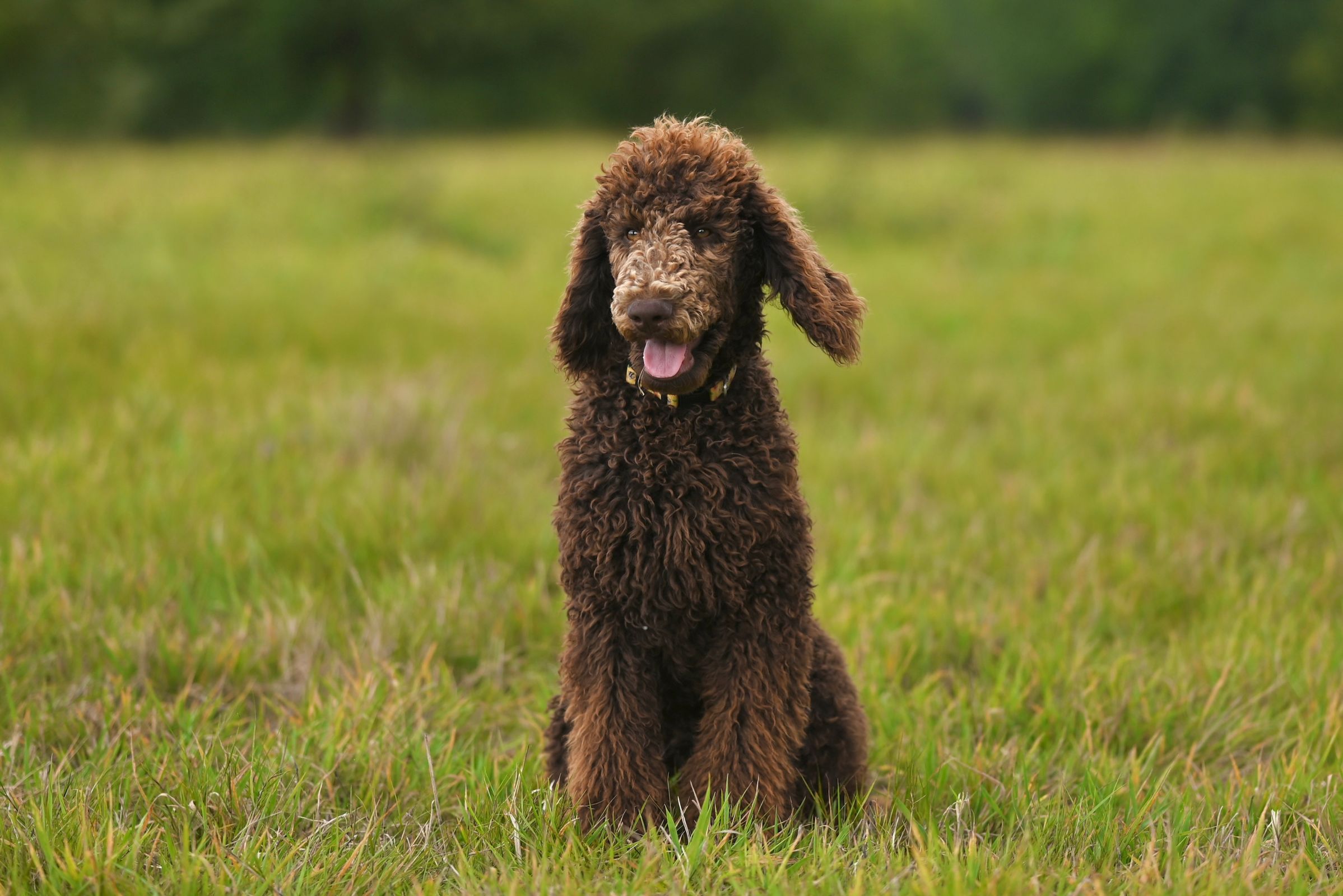
The Standard Poodle is where the whole breed began: a European water retriever built to swim, run and think all day. Of the four FCI sizes it is the largest, and the one that most clearly shows you're dealing with a genuine working dog, not a fashion accessory. Our editorial team put together this guide for anyone considering the biggest Poodle: what it's like to live with, what it needs, and who it does (and doesn't) suit.
Key facts
- Shoulder height: 45-60 cm (18-24 in) under FCI rules; the AKC counts everything over 15 inches as a Standard.
- Weight: roughly 20-30 kg (44-66 lbs).
- Life expectancy: around 12-14 years.
- Energy level: high: this is a true working dog.
- Suited to: sporty owners and active families with time and space.
Temperament and energy
Poodles rank among the most intelligent dog breeds in the world: new commands often stick within a handful of repetitions, and in the Standard that brain comes with an athlete's body. Expect a dog that is alert, watchful, deeply attached to its people and visibly happiest when it has a job: retrieving, swimming, agility, long hikes, scent work. The flip side is just as clear: an under-worked Standard Poodle turns restless, vocal and inventive in ways that involve your furniture.
Who the Standard Poodle is (and isn't) for
Honest answer: this size is for people who want a canine training partner, not a low-effort companion. A great match if you run, hike or do dog sports, have a house with some space, and enjoy daily training. A poor match if you live in a small apartment without a very active lifestyle, work away from home all day, or want a dog that entertains itself. The Standard's needs are the same as any working breed's: the curly coat doesn't change that.
Care and exercise
Count on well over an hour of genuine exercise daily, ideally split across walks, free running and mental work. The coat is the same across all Poodle sizes: curly, continuously growing and non-shedding, which means brushing several times a week and a full groom every 6-8 weeks: simply more surface area to cover at this size, so grooming bills run higher than for the smaller Poodles. Like all Poodles, the Standard is considered relatively allergy-friendly.
Health at this size
The Standard Poodle is generally a sound, athletic dog, but as with many larger breeds there are known points of attention: gastric torsion (bloat) and hip dysplasia are the two most often mentioned for big Poodles. That's not a reason to panic: it's a reason to choose carefully. A serious breeder tests breeding dogs for patellar luxation, eye conditions and prcd-PRA (the standard Poodle health panel), and for Standards will usually screen hips as well. Ask to see the results; a good breeder shows them unprompted.
What does a Standard Poodle cost?
From a reputable, health-testing breeder, expect a puppy price broadly in the $1,000-3,000 range (roughly £800-2,500 / €1,000-3,000), depending on country, pedigree and the parents' health testing. Significantly cheaper puppies almost always come from breeders who skipped the tests, a saving you tend to repay at the vet. Avoid high-volume sellers with multiple litters always available; no serious Standard Poodle breeder operates that way. See our full Standard Poodle price breakdown for monthly and lifetime costs, and how to recognize a good breeder for this size, including the hip-screening test that matters here specifically.
Standard vs. the other sizes
Closest neighbor is the Medium Poodle (Moyen): same temperament in a more compact, apartment-friendlier package. The Miniature and Toy Poodle share the intelligence and coat but suit smaller homes and lighter lifestyles. For the full side-by-side comparison, see our overview of all Poodle sizes.
In short
- Largest Poodle: 45-60 cm, 20-30 kg, life expectancy around 12-14 years.
- A genuine working dog: athletic, alert and in need of daily exercise and brain work.
- Known attention points for large Poodles: bloat and hip dysplasia: choose a breeder who health-tests.
- Best for sporty owners and active families; not for small apartments without a very active routine.